If you’re comparing Dukaan vs Shopify, you’re probably trying to avoid two things: wasting money now, and wasting time rebuilding later.
Here’s my honest take after testing both.
Shopify wins for most people.
Dukaan is a simpler, India-first ecommerce builder that can work for quick, local selling setups. But Shopify is built for stores that want to scale, rank on Google, and add real tools over time without feeling boxed in.
I built a small test store on both platforms and ran them through the same checks: adding products, testing themes and editing, setting up payments and shipping, running a full checkout, and testing support.
Next, I’ll break down the differences in plain English: how fast you can launch, how much control you actually get, how checkout feels, what helps with SEO, and which platform holds up when your store starts getting real traction.
If you decide Shopify is the right move, here’s my step-by-step Shopify guide.
| Testing and Research notes for Shopify and Dukaan: I tested both like I was setting up a store this week and continue this. I last tested and researched on May 12, 2026, then built a small test store on each platform. I tried the theme and page editor, added products, poked through payments and shipping setup, and ran through the buying flow so I could see what a customer would see. I also tested support, because that’s what saves you when something breaks. Then I stacked that hands-on testing with my own checklist and real user feedback, so the “winner” is not just opinion, it’s based on what I saw, what I tried, and what real store owners keep running into.
Chris Pontine: Lead Researcher & Tester |
Quick Summary Of Dukaan Vs Shopify
| Feature | Dukaan | Shopify 🏆 (Winner Easily) |
|---|---|---|
| My key thoughts | It’s a simple, no-code eCommerce platform for small businesses, mainly in India. Personally, I would not use this platform. Although the features don’t seem bad I feel everything was last updated since 2023 based off their blog and social media posts. | This is my choice from these 2 and its my top choice for building an eCommerce website. It offers seamless help for beginners and up and overall this company never stops working on their platform. From a testing stand point its simple and it offers everything that is needed. |
| Best For | Small businesses & local sellers wanting a quick online store setup. | Entrepreneurs, brands, and businesses looking for scalability & advanced features. |
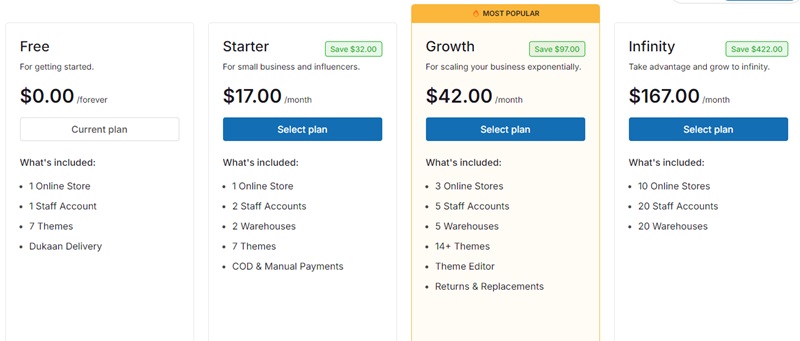
| Pricing |
|
|
| Free Trial | 7-day free trial | 3-day free trial + $1 for the first 3 months |
| Ease of Use | Very beginner-friendly with a no-code approach. | Easy to use, but with more customization options and flexibility. |
| Customization & Themes | Limited free themes, basic design flexibility. | 100+ professional themes, extensive customization with Liquid coding. |
| eCommerce Features |
|
|
| SEO & Marketing |
|
|
| Payment Gateways | Limited to a few Indian payment gateways. | Supports 100+ payment gateways, including PayPal, Stripe, Shopify Payments. |
| Scalability | Best for small businesses, limited features for scaling. | Designed for scaling businesses, from startups to enterprise brands. |
Try Shopify Free
Still deciding? here are my top eCommerce website builders overall
Ratings Breakdown Summary
| Shopify Vs Dukaan On Ratings | Shopify | Dukaan |
| Ease of use | 4.6 out of 5 | 3.5 out of 5 |
| Customer Support | 4.9 out of 5 | 2.0 out of 5 |
| Tools it offers (Marketing, SEO, Product Tools) | 4.6 out of 5 | 3.0 out of 5 |
| 25-point feature checklist | 4.6 out of 5 | 3.1 out of 5 |
| Testing project | 4.6 out of 5 | 4.1 out of 5 |
| Customer User Rating Score | 4.5 out of 5 based on 6,280 customer users | 4.15 out of 5 based on 68 Users |
| Overall Rating | 4.63 out of 5 | 3.30 out of 5 |
Pros And Cons Of Both
Shopify Pros And Cons
The Pros |
|
The Cons |
|
Dukaan Pros And Cons
The Pros |
|
The Cons |
|
Set Up: Getting Off the Ground With These 2
When you’re launching an online business, the initial setup process can either be a smooth runway or a field of hurdles.
Dukaan
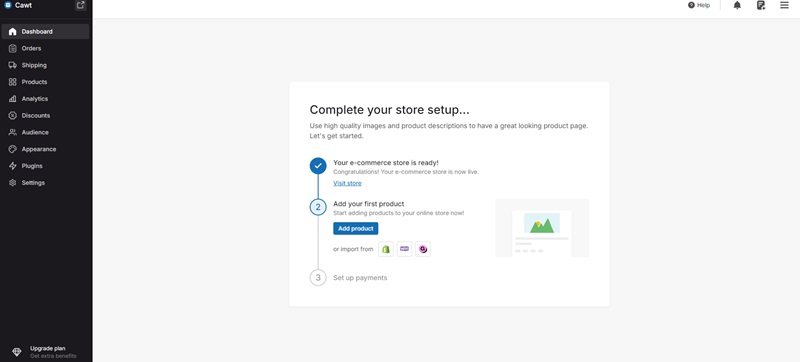
- Offers a simple, straightforward setup. You’ve got the absolute basics covered, with minimal tech knowledge required.
- However, its no-frills approach means you’re starting off really bare bones.
Shopify
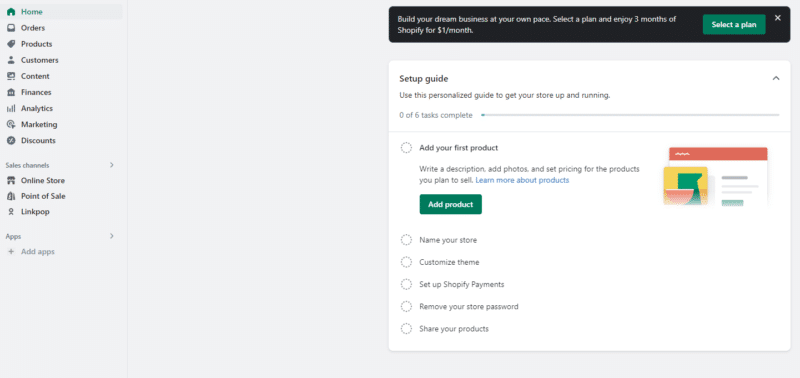
- Provides a detailed, well-guided setup process. It demands a bit more from you but gives back in spades.
- A wealth of resources, such as tutorials and an active community, run interference when issues arise.
| Getting started notes: My take is they’re both simple to get started with, just in different ways. Dukaan is so easy that you might actually sit there for a second like, “Alright… now what?” It’s a clean, simple approach for sure, but I do wish it gave you a little more guidance upfront. Shopify is still beginner-friendly, but it feels more like a checklist with a setup flow that nudges you along, which can be a good thing if you want direction. So it really comes down to what “simple” means to you. For me, Dukaan is almost too minimal, and I think it should add a bit more to help you get moving right away.
Chris Pontine: Lead Researcher & Tester |
Customizability: Making Your Store Yours
The look and feel of your online store dictate your brand identity.
Here’s how each platform lets you flaunt your style.
Dukaan

- Comes with a few decent templates. However, a truncated list can sometimes limit your creative expression.
- The drag-and-drop interface simplifies setting up your store without any coding expertise.
Shopify
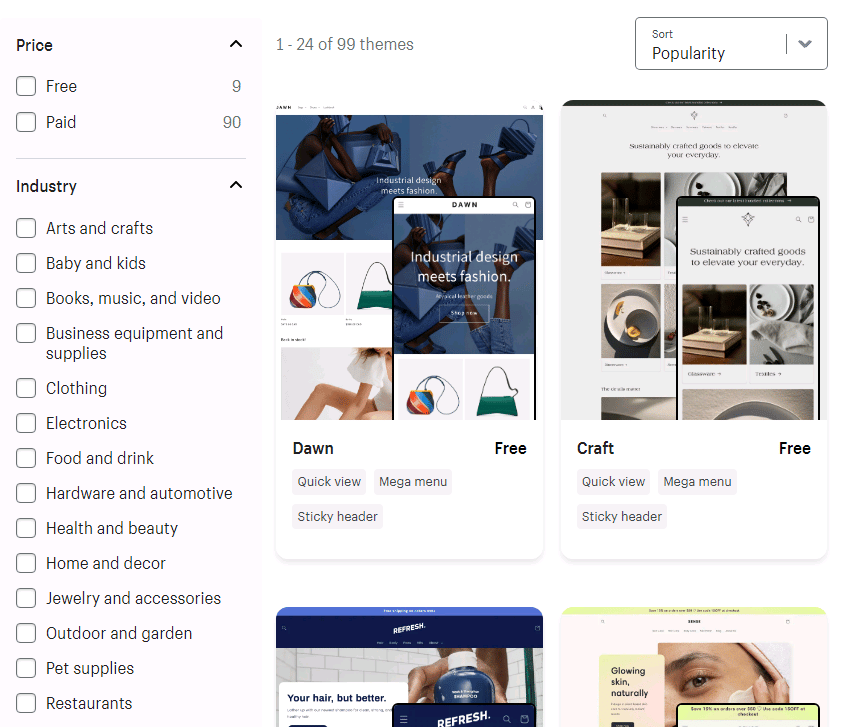
- Offers a wider range of themes, both free and paid, that provide greater design freedom.
- Gives you access to design experts if you want to dress your store in a unique attire.
| My thoughts on theme building and customization: When it comes to themes and actually building your store, Shopify felt a lot more polished in my testing. You get a solid mix of free and premium themes, and the whole setup flow is smoother, especially with Shopify’s AI tools helping you get a starting layout in place faster. The big difference for me was editing. Shopify’s drag-and-drop style builder makes it way easier to customize pages without feeling stuck, so you can move sections around and see progress right away. Dukaan has theme options too, but since it doesn’t give you that same drag-and-drop control, it felt more limiting and a bit clunky to set up. Honestly, Dukaan has a lot going on, but the way it’s organized didn’t feel as user-friendly when I was trying to get a clean store design live.
|
Features: The Tools of the Trade (Shopify Wins)
Features are what make a store feel easy to run, or a total headache.
So instead of just listing “who has what,” I looked at the stuff that actually matters when you’re building a real store:
- Can I build pages fast without code?
- Can I run products, orders, and discounts without fighting the dashboard?
- Can I add new tools later without switching platforms?
Also quick note: app and plugin counts change all the time, so I care more about the size of the ecosystem and what you can actually add when you need it.
Dukaan features
Dukaan covers the essentials and keeps things simple. If you want a store live fast and you are not trying to build a super complex setup, it checks a lot of boxes.
Here’s what stood out in my testing:
- Fast store launch with themes and basic customization
- Core store tools like products, variants, inventory, and orders
- Built-in business tools like invoices, reports, and basic analytics
- Staff accounts and roles so you can give access without handing over everything
- Extras geared toward smoother ops like optimized checkout and multi-warehouse options (depending on your setup)
Where Dukaan starts to feel “lighter” is when you want deeper control or more advanced workflows. It’s not always that the feature is missing, it’s that the setup and usability can feel less guided.
Plugins are the big add-on path for Dukaan. As of right now, their plugin marketplace shows 87 plugins across categories like marketing, analytics, customer support, shipping, and store management. That’s a solid start, and it’s growing, but it’s still a smaller ecosystem. You might find everything you need, or you might hit a moment where the exact tool you want just isn’t there yet.
Best way to think about Dukaan features:
Simple store, simple needs, and you want to move fast.
Shopify features
Shopify feels like the full tool belt. You can start basic, but you can also keep stacking features as your store grows.
What stood out in my testing:
- Drag-and-drop style building with sections, so pages are easier to customize
- Strong product and inventory tools that hold up as your catalog grows
- Discounting and promos that can get more advanced as you need them to
- Multi-channel selling options so you can sell beyond just your website
- Reporting and analytics that get more useful once you care about conversion and repeat customers
- Tons of integrations for email, reviews, upsells, subscriptions, shipping, and automation
The biggest difference is the ecosystem. Shopify’s app marketplace is massive. Depending on how you count it, you’re looking at well over 10,000 apps and it can be 15,000 plus in some trackers. Either way, it’s huge, and it means you can usually find an app for almost any feature you want to bolt on later.
On SEO, Shopify doesn’t magically rank you, but it does give you a solid base. You can edit key SEO settings (like titles, descriptions, URLs), and you can add apps when you want to go deeper with things like structured data, image SEO, internal linking, and richer on-page tools.
Best way to think about Shopify features:
You want flexibility, control, and room to grow without switching platforms later.
Dukaan gives you the core features to run a simple store, plus a smaller but growing plugin library. Shopify gives you a deeper built-in toolkit and a much bigger app ecosystem, which matters when you start adding marketing, SEO, and conversion tools to grow.
If you want simple and low friction, Dukaan can work. If you want a platform that can expand with your business without you feeling boxed in, Shopify is the stronger pick.
| Testing and research thoughts: The simplest way to double-check and one of the things I do is a 10-minute test: add 1 product, try to edit your homepage, add one free app, and 1 add a blog post or research this area. If that feels smooth and you can quickly find help when you get stuck, you’re on the right platform |
Try Shopify Free or Try Dukaan Free
Scaling: Growth and Beyond (Shopify Wins)
“Scaling” isn’t just more traffic.
It’s more products, more orders, more tools, more people helping you, and more chances for things to break if the platform can’t keep up.
When I test a platform for growth, I’m not asking “can it sell 10 orders?”
I’m asking:
- Can it handle a bigger catalog without turning into a manual mess?
- Can it handle more operations (shipping rules, returns, inventory, fulfillment)?
- Can it handle a real business workflow (team access, permissions, automations)?
Dukaan: strong for simple growth, but you can feel the ceiling
Dukaan does a solid job for startups and small stores that want to launch fast and keep things simple.
If your store looks like this, Dukaan can be a good fit:
- Smaller catalog
- Straightforward shipping
- Basic inventory needs
- You’re running most things yourself
- You want “clean and simple” more than “custom and powerful”
But once you start thinking bigger, the friction shows up.
Not because Dukaan is “bad,” but because it’s built for “keep it simple” first.
The ceiling usually feels like this:
- You need more control over how things work
- You want deeper integrations
- You want more advanced automation
- Your operations get complicated fast (multiple locations, lots of daily orders, multiple fulfillment methods)
At that point, you start making choices like:
- Work around limitations
- Pay for add-ons or custom help
- Simplify your business to match the platform (which is the opposite of scaling)
Shopify: built for growth from day one
Shopify feels like it expects you to grow into complexity.
It’s not just “you can upgrade your plan.”
It’s that the system is built around scaling problems:
- Catalog scale
More products, more variants, more collections, and better ways to manage a growing store without constantly hand-editing everything. - Ops scale
As you add more orders, Shopify supports the kind of day-to-day operational structure that keeps you sane:
inventory locations, shipping setups, tax settings, apps that plug into real workflows, and ways to handle fulfillment growth without rebuilding your store. - Automation scale
This is a big one. Growth is usually death by a thousand small tasks.
Shopify has a stronger path for automations as you scale, so you can stop doing everything manually. - Team scale
Once it’s not just you, the admin experience matters a lot.
Shopify is made for “multiple people working inside one machine” without everything becoming chaotic.
My scaling thoughts after testing both
They can both get you started.
But they don’t feel the same when you picture real growth.
Dukaan feels best when your store needs to stay simple and you want a store live fast.
Shopify feels best when you’re planning for:
- More products
- More orders
- More moving parts
- More tools
- More people involved
The biggest difference is the upgrade path.
With Shopify, you can start small, then grow into stronger features without feeling like you’re going to hit a wall.
With Dukaan, scaling tends to feel more like “how do I keep this simple enough to keep working?” instead of “how do I build this bigger?”
Verdict for scaling
Shopify wins for scaling because it gives you room to grow without making you start over later.
If you’re staying small and simple, Dukaan can work.
If you want a platform that can grow with you as the business gets more complex, Shopify is the safer long-term home.
| My scaling thoughts: My take after testing both is this: they can both get you started, but they don’t feel the same once you picture real growth. Dukaan does a decent job if you’re a startup with a smaller catalog and you just want a simple store live fast. But once you start thinking bigger like adding a lot more products, handling more orders, or needing more control over how everything runs, you can feel the ceiling. It’s not that Dukaan can’t work, it’s just built more for “keep it simple” than “build it big.”Shopify felt like it was made for growth from day one. The admin is set up to handle more traffic, more sales, and more moving parts without you having to redo your store later. What I like most is the upgrade path. You can start on a lower plan, then move up as your store grows instead of hitting a wall and needing to switch platforms when things finally start working. Verdict for scaling: Shopify wins because it gives you room to grow without making you start over. |
International Sales: Drawing the World Closer (Shopify Wins)
Selling “internationally” sounds like a simple switch.
In real life, it’s 6 problems you have to solve at the same time:
- Currency and pricing that feels local
- Language and trust (not just translation, but the full buying experience)
- Shipping rates, delivery times, and tracking
- Taxes and duties expectations (and who pays them)
- Local payment methods people actually use
- SEO signals so Google shows the right version to the right country
That’s why international selling is a great “topical authority” test for any platform. The platform either supports real localization, or it just lets you ship overseas.
Dukaan: basic global selling, limited localization
Dukaan can work if your definition of international is:
- “I’m in one country, but I’ll ship to other countries.”
- “I want a simple store and I’ll handle the edge cases myself.”
From what I’ve seen, Dukaan is usually more “starter global commerce”:
- Basic currency and shipping handling
- Less depth on multilingual storefront management
- Fewer built-in controls for region-by-region selling rules (the kind you need once you scale)
So yes, you can sell to someone in another country. But fully tailoring the experience by region tends to feel limited, especially if you want a polished, local-feeling checkout and storefront.
Shopify: built for real cross-border selling
Shopify is stronger here because it’s designed around “Markets style” selling. Meaning you can run one store, but present different experiences by region.
Here’s what matters for international, and where Shopify tends to shine.
1. Multi-currency that feels native
International sales are not just “convert USD to EUR.”
It’s also:
- Price rounding that feels normal locally (no weird decimals)
- Consistent pricing across storefront, cart, checkout, emails
- A clean path for exchange rate changes without destroying your margins
Shopify is typically better at making multi-currency feel like part of the store, not a hack sitting on top of it.
One important nuance though. Multi-currency often depends on your payment setup. If you do not have access to the right payment options in your country, you might need a different approach.
2. Multilingual support that goes beyond the homepage
A “multilingual store” is only real when it covers:
- Navigation, product pages, collection pages
- Cart and checkout language
- Transactional emails and notifications
- Policies like shipping, returns, and privacy pages
- On-site search and filters (even if partially)
Shopify is generally the better platform for managing a real multilingual storefront because it supports the structure needed to keep multiple languages organized.

3. Region-specific payments that boost conversion
This is the silent conversion lever most beginners miss.
People do not just want to see their currency. They want to pay the way they normally pay.
Examples:
- Bank transfer style options in some regions
- Buy now pay later options where they are common
- Local card preferences and trust signals
Shopify usually has a stronger path here because the ecosystem is built around conversion and checkout.
4. International shipping that stays manageable
Shipping internationally is where stores break.
You need:
- Clear shipping zones and rates
- Realistic delivery timelines by region
- Duties and tax expectations clearly communicated
- Tracking that does not turn into support tickets
Shopify tends to give you more room to build a clean shipping setup, and the ecosystem is deeper if you need to connect fulfillment, carriers, or shipping tools later.

5. International SEO basics
If you run multiple languages or regions, you need to avoid a classic mistake.
The classic mistake is creating multiple versions of the same content without clear signals to Google.
A strong setup usually includes:
- A clean URL structure for languages
- Country targeting strategy that makes sense for your store
- A plan for duplicate content and local pages
Shopify is generally easier to scale here because it’s used by so many global stores, and the structure is made for commerce at scale.
What I look for when judging “international ready”
If you want this section to feel more expert, these are the questions that separate “basic” from “serious”:
- Can I set different prices per region without breaking everything?
- Can I show the right currency from the first page load?
- Can I translate the full shopping flow, not just the homepage?
- Can I offer region-trusted payment methods?
- Can I control shipping by zone with clear rules?
- Can I keep SEO clean with multiple languages and regions?
Verdict: Shopify wins for international sales
If your goal is true international growth, Shopify is the clear leader because it supports real localization across currency, language, payments, and operational scaling.
Quick challenge though, because this is where people get burned.
Shopify can give you the platform tools, but it cannot magically fix international operations.
Before you go “global,” make sure you can answer:
- Who handles returns from other countries?
- Are you charging duties up front or making the customer pay on delivery?
- Do you have support coverage for time zones and languages?
- Are your delivery times realistic, or are you creating refund requests?
If you want, I can add a short “International launch checklist” box right under this section so it feels like a pro guide, not just a comparison.
Uptime and Performance (Shopify Wins)
If your store is slow or goes down, you don’t just lose traffic. You lose trust. People bounce, carts get abandoned, and you end up spending money on ads that never had a chance to convert.
Dukaan uptime and performance
Dukaan is generally solid for what it’s built for: smaller stores that need a simple site that works. In normal day-to-day use, pages load fine and the platform feels stable. If you’re running a straightforward catalog and you’re not doing a ton of heavy customization, Dukaan usually holds up and gives shoppers a smooth experience.
Where things can get a little fuzzy is when you start pushing it harder. More products, more traffic, more plugins, more “stuff” on the site. That’s typically when performance becomes less about the platform and more about how your store is built.
Shopify uptime and performance
Shopify has the advantage of being built for scale. Even if you’re a small store today, the infrastructure is designed for stores that get slammed with traffic, run big promos, and handle a lot of orders without falling over. In my experience, Shopify stores tend to feel consistently fast, and the checkout flow stays smooth, which is the most important part.
That said, Shopify performance still depends on your choices. Heavy themes, huge images, and too many apps can slow any store down. The difference is Shopify gives you a stronger baseline and more breathing room before speed becomes a problem.
My verdict
Both can perform well, but Shopify is the safer pick if you care about long-term reliability and staying smooth as your store grows. Dukaan is fine for simpler setups, but Shopify is the one I’d trust more when traffic and orders start climbing.
Payments and Transactions (Shopify Wins)
Payments are one of those things you don’t think about until customers start bouncing at checkout. If people can’t pay the way they want, you lose the sale. Simple.
When I judge payments on a platform, I look at two things:
- Conversion: does checkout feel fast, trusted, and familiar?
- Operations: are refunds, payouts, and disputes clean once orders scale?
What really moves conversion at checkout
Most lost sales come from a few repeat problems:
- Checkout redirects that feel sketchy
- Too many steps and too much typing
- Missing local methods (buyers won’t “figure it out”)
- Failed payments with no easy retry
- Refunds and chargebacks turning into a mess
Dukaan payments
Dukaan covers the basics well, especially if you’re selling in India.
You can usually offer the everyday stuff like card payments, UPI-style options, and cash on delivery. For a simple store, that’s enough.
Where Dukaan can feel limited is when payments become a growth lever:
- You want more region-specific methods outside its core market
- You need more gateway flexibility
- You’re selling cross-border and want checkout to feel local
- You want smoother recovery flows when payments fail
My take: Dukaan is fine for straightforward selling, but it’s not the platform I’d pick if checkout optimization is a priority.
Shopify payments
Shopify is stronger because it gives you more paths to “yes.”
- More options: Shopify Payments (where available) or a wide range of third-party gateways
- Smoother checkout: faster wallet-style checkouts depending on setup and device
- Cleaner money ops: refunds (including partial), payouts, and dispute handling feel more business-ready as volume grows
- Better for international: stronger foundations for region-based selling, where payment preferences vary by country
The fee trap to mention (quick but important)
Real payment cost usually stacks in 3 layers:
- Platform transaction fees (sometimes different if you use an outside gateway)
- Processor fees (cards, wallets)
- Cross-border and currency conversion fees
Verdict
If you’re selling locally with simple payment needs, Dukaan can work.
If you care about conversion, payment flexibility, and keeping refunds and payouts clean as you grow, Shopify wins.
Checkout and Conversion Tools: Where Profit Is Won (Shopify Wins)
Checkout is the last mile of your sales funnel.
You can have great products, great traffic, even great pricing… and still lose the sale if the buying flow has checkout friction (extra steps, slow pages, confusing discounts, or missing payment options).
That’s also where cart abandonment triggers show up, and your Customer Acquisition Cost starts to feel painful.
When I judge a platform here, I’m not judging “does it have a checkout.”
I’m judging whether it can support a real conversion system:
- Friction reduction (fewer clicks, faster pay, less typing)
- Offer control (discount rules, bundles, tiered promos)
- Average Order Value growth (upsells, cross-sells, post-purchase)
- Recovery loops (abandoned checkout, email/SMS, remarketing)
- Extensibility (third-party app ecosystem and API extensibility)
Dukaan: Optimized for Speed, Not Deep Conversion Systems
Dukaan’s checkout approach is built for simplicity.
That’s not a bad thing. It’s perfect when your business model is:
- Smaller catalog
- Fast “buy now” behavior
- Social traffic and chat-based trust
- WhatsApp Commerce follow-ups being a core part of sales
What Dukaan does well:
- Quick setup and a clean, basic buying flow
- Basic promotions
- Abandoned cart style recovery on certain plans
- A workflow that fits local selling where conversation closes the deal
Where you may feel the ceiling is checkout extensibility.
Once you start thinking like a growth-focused store, you usually want things like:
- Advanced discount logic (tiered deals, conditional promos, stack rules)
- Bundles that actually raise AOV without confusing customers
- Post-purchase offers (one-click add-ons after payment)
- Subscription flows (if you sell consumables)
- Conversion testing (small experiments that lift revenue over time)
That’s where Dukaan can start to feel “light.” You can add tools, but you’re relying more on add-ons and workarounds instead of building on a platform that was designed for CRO from the start.
Shopify: Built for Conversion Rate Optimization
Shopify is the stronger conversion platform because it’s designed around “buying at scale.”
A few reasons it performs better for serious stores:
1. One-click accelerated checkouts
Shopify supports one-click accelerated checkouts like Shop Pay and device-based wallets (depending on region and setup). This matters because the fastest checkout is the one where the customer doesn’t have to think or type.
There’s also a bigger strategic reason here.
Shop Pay is part of a larger identity-style checkout network. Returning customers can move faster because their info is remembered, which reduces friction and helps conversion, especially on mobile.

2. Recovery loops are a core workflow, not an extra feature
Abandoned checkout recovery isn’t a “nice add-on” on Shopify. It’s a core part of how stores operate.
The store can run a real recovery system:
- Abandoned checkout emails
- SMS follow-ups (if you choose)
- Retargeting flows
- Time-based offers to pull people back
3. The ecosystem advantage
This is the big one.
Shopify has a deep third-party app ecosystem and API extensibility, which means you can layer in CRO tools without rebuilding your store.
That includes:
- Upsells and cross-sells
- Bundling
- Subscriptions
- Post-purchase offers
- Testing and analytics
Even if you never become a “conversion nerd,” the platform supports the path from simple store to optimized store.
The “Friction Test” that should help you
My quick checkout test is simple, but it tells you everything.
- Create one discount (and try to make it conditional, not just a blanket sale)
- Find the abandoned checkout recovery settings
- Run two fake checkouts on mobile
one with a standard card
one with a wallet option (if available) - Count clicks to completion and note where it feels slow or annoying
If it feels annoying for you, it will feel annoying for customers.
Verdict
Dukaan is solid if your goal is to launch fast and sell through simple, social-first flows.
But if you want serious control over discounts, AOV boosters, post-purchase funnels, and a checkout that’s built to reduce friction at scale, Shopify wins.
Pro tip for your internal hub: If you want to go deeper, add a small “Related” box here that links to your Shopify guide on cart recovery or mobile checkout optimization. That internal linking is how you turn one comparison into a topical authority cluster.
Shipping and Delivery (Shopify Wins)
Shipping feels “easy” until you’re getting orders daily. Then it becomes the backbone of your store.
If your shipping rules are messy, you get 3 problems fast:
- Customers bounce at checkout from surprise costs
- Support tickets pile up from “where’s my order?”
- Refunds creep up because delivery expectations were unclear
When I compare shipping on platforms, I’m not judging “can it add a rate.”
I’m judging whether it can handle real-world shipping as you scale.
What actually matters for shipping (the growth checklist)
Strong shipping setup usually comes down to:
- Shipping zones (local, domestic, international)
- Rate logic (flat rate, free over threshold, weight or price based)
- Multiple delivery options (standard vs express)
- Fulfillment reality (you, warehouse, supplier, or a mix)
- Edge cases (address issues, failed delivery, returns)
Dukaan shipping
Dukaan feels built for India-first workflows.
It’s a good fit when:
- You ship mainly in India
- Your shipping rules are straightforward
- You want a simple setup that matches how many local sellers operate
Where it can feel limiting is when shipping gets layered:
- Multiple zones with different rules
- Heavier items needing different pricing
- Express vs standard options
- Multiple fulfillment locations
- International shipping with clean rules and expectations
You can often piece things together, but the platform leans “keep it simple” more than “build a shipping system.”
Shopify shipping
Shopify wins because it’s easier to structure shipping like a system you can grow into.
It’s stronger for:
- Building clear zones and scaling rules over time
- Offering multiple delivery options without confusion
- Supporting more complex fulfillment setups (multiple origins, mixed products)
- Cross-border selling workflows, where shipping quickly gets complicated
If you’re in India, Shopify can still work well. Many stores pair Shopify with shipping tools that fit India carriers and workflows. The advantage is you get the bigger foundation, then plug in what you need.
Shopify shipping zone test: I created 2 shipping zones (local + everywhere else), added one rate to each zone, then ran a test checkout with a local address and an out-of-area address to make sure Shopify shows the correct shipping options and doesn’t leak the wrong rate. Very impressed overall.
My quick shipping test
Set up:
- One local or domestic rate
- One “everywhere else” rate
- One condition (free shipping over X or weight-based pricing)
If that feels confusing now, shipping will become painful the moment you grow.
Verdict
If you’re shipping mostly in India and want simple, Dukaan can work.
If you want flexibility, multi-zone rules, and a platform that won’t fight you as orders and complexity increase, Shopify wins.
Taxes and Invoices (Shopify Wins)
Taxes are boring until they’re wrong. Then they turn into the most stressful part of running your store.
When I judge a platform here, I’m checking 3 things:
- Tax accuracy: does it charge the right tax at checkout based on buyer location and your settings?
- Paper trail: do receipts, invoices, and credit/refund records match the order details?
- Accountant-ready exports: can you pull clean reports without manual cleanup?
What usually causes tax headaches
It’s rarely just “tax on.” It’s stuff like:
- Tax included vs tax added
- Tax on shipping
- Different rates by region
- Refunds and partial refunds adjusting taxes correctly
- B2B or tax-exempt cases (when relevant)
Dukaan taxes and invoices
Dukaan is built to keep taxes and invoicing simple for small businesses, especially if your setup is straightforward.
It works well when:
- You sell mostly in one region
- Your tax rules are simple
- You just need basic invoices/receipts for daily operations
Where it can feel limited is when you need deeper control for multi-region selling, more complex tax behavior, or more structured invoicing workflows.
Shopify taxes and invoices
Shopify is the stronger long-term fit because it’s built for more complex selling situations.
It’s easier to grow into:
- Multi-region tax setups
- More consistent invoicing workflows (invoices, packing slips, refunds)
- Cleaner reporting and exports as order volume increases
My quick test
Place 2 test orders:
- One local address
- One out-of-region address
Then do a partial refund on one order and check the receipt/invoice and reports.
If you can’t confidently hand that order record to your accountant, that’s a red flag.
Verdict
If your taxes are simple and local, Dukaan can work.
If you expect multi-region selling or want cleaner invoicing and reporting as you grow, Shopify wins.
Selling Channels (Shopify Wins)
If you only sell on your website, selling channels feel small.
But if you want real growth, channels matter because they diversify where sales come from. That means you’re not relying on one traffic source.
When I judge “selling channels,” I look at 4 things:
- Reach: how many places can you sell without rebuilding?
- Sync: do inventory and orders stay synced across channels?
- Workflow: can you manage it all from one dashboard without chaos?
- Consistency: do pricing and product details stay clean everywhere?
Dukaan: great for social and WhatsApp-style selling, narrower beyond that
Dukaan shines when the buying flow is conversation-based.
Think:
- Someone finds you on social
- They message you on WhatsApp
- You close the sale through trust and quick checkout
That can work really well for local selling and relationship-driven customers.
Where Dukaan can feel limiting is “channel stacking,” like:
- Deeper marketplace workflows
- More advanced integrations
- Serious in-person selling with tight inventory control
It’s more of a social selling engine than a full multi-channel system.
Shopify: built for multi-channel without losing control
Shopify is stronger because it’s designed around one core idea:
1 product catalog, pushed to multiple channels, orders coming back into one place.
That matters because inventory is what breaks first when you expand.
Shopify also has a strong POS option, which is a big deal if you do pop-ups, markets, or retail.

My quick test
Create one product with two variants and a real stock count.
Then publish it to another channel and run a test order.
If inventory and orders don’t stay clean and synced, it’ll get messy fast as your catalog grows.
Verdict
If your plan is mostly social + WhatsApp selling, Dukaan can work.
If you want to expand channels without losing control of inventory and operations, Shopify wins.
Security and Trust Basics
Security isn’t just the lock icon.
Real ecommerce security is two-sided:
- Customer trust: people feel safe paying
- Business protection: you’re protected from fraud, chargebacks, account takeovers, and risky apps
That matters because one fraud wave or chargeback streak can wipe out profit fast.
What actually matters (beyond SSL)
When I judge a platform’s security, I look for:
- Checkout trust: clean, professional checkout with no sketchy redirects
- Admin controls: staff access and permissions you can actually lock down
- Fraud signals: some kind of order risk indicator before you fulfill
- Chargeback reality: tools and visibility so disputes aren’t a mystery
- App risk: you’re not forced to install random stuff just to feel secure
Dukaan security
Dukaan covers the basics most small sellers need:
- Secure storefront and checkout foundation
- Enough trust signals to start selling without customers feeling unsure
Where it can feel lighter is as volume grows:
- Deeper fraud tools and clearer risk signals
- More advanced admin controls for teams
- More visibility when an order looks suspicious
Shopify security
Shopify is stronger because it’s built for higher volume stores.
You get:
- A solid security baseline out of the box
- Built-in fraud analysis to flag risky orders
- Stronger admin and operational controls as you add staff and scale
My quick test
Right after setup I check:
- Secure checkout is obvious
- Admin access can be locked down
- There are clear fraud or risk indicators on orders
If those aren’t easy to find, I don’t feel comfortable scaling on the platform.
Verdict
Dukaan is fine for basic trust and smaller stores.
If you care about fraud protection and long-term confidence as order volume grows, Shopify wins.
Pricing and Value
Every penny counts when you’re investing in your business, so I always look at pricing the “real” way.
Not just the monthly number, but:
- What you actually get at that tier
- What you’ll need to pay for later
- How easy it is to upgrade without rebuilding your store
Dukaan pricing
Dukaan is the cheaper option to get moving fast. They usually have promos running, and the “start free” angle is hard to ignore if you’re on a tight budget. That said, the lower price usually comes with tighter features, and depending on the plan, you might also run into sales-related fees once orders start coming in. So it can feel “free” at first, but the true cost depends on how much you sell and what you need your store to do.
One thing I actually like about Dukaan is the multi-store option. If you want to run more than one storefront, Dukaan can be a low-cost way to do that as you upgrade, which is nice if you’re testing multiple ideas without spending a ton per store.
Best fit for Dukaan:
A startup or small shop that wants simple, low-cost, and doesn’t need a lot of advanced features yet.
Shopify pricing
Shopify costs more, but the value is in the growth path. It’s built so you can start small, then step up plans as your traffic, orders, and needs grow. Also, Shopify often runs a promo to help you start cheaper, so it’s worth checking before you commit.
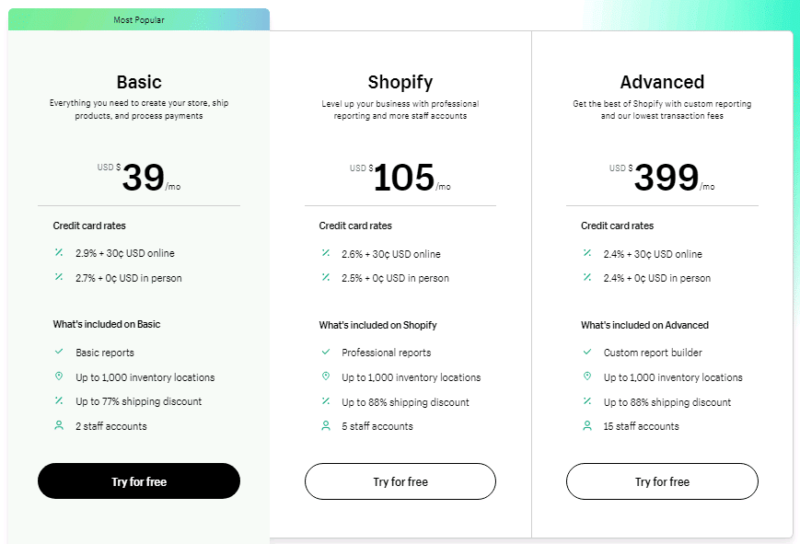
Here are the Shopify plans to know:
- Shopify Starter: $5/month (good for selling through social and messages)
- Basic: $39/month
- Grow: $105/month
- Advanced: $399/month
- Shopify Plus: starts around $2,000+/month (for bigger brands with more complex needs)
Best fit for Shopify:
Someone who wants room to grow, more built-in tools, and a platform that won’t feel limiting once the store starts getting real traction.
My verdict on pricing
If your main goal is the lowest cost and you want to keep things simple, Dukaan can be a solid start.
But if you’re building something you want to grow, Shopify gives you better long-term value because the plans scale cleanly and you’re less likely to hit a wall later and need to switch platforms.
Try Shopify Free or Try Dukaan Free
Customer Support
Things happen right?
And when they do, quick, helpful support is key.
Dukaan
- Basic Support: Dukaan offers the bare minimum in customer support. They wanted me to download some app so I stopped that process.
- The other disappointing thing is I thought they had actual live chat but it’s just AI responding which is a tad helpful but not what I want.
Shopify
- Robust Support: Round-the-clock support via multiple channels, like live chat and email – not to mention a comprehensive Knowledge Base for self-service troubleshooters.
- Community Forum: A bustling forum where you can find answers and share experiences with other Shopify users.
- Phone number: I use chat and never have went this route but the fact they have it is awesome
| Overall for customer support: Overall, Shopify is easily better for customer support. With Dukaan, it felt like the vibe was “figure it out yourself,” and when I tried to get help, I mostly ran into AI-style responses or prompts to download an app for support, which I personally wasn’t into, so I clicked off. Shopify also has a lot of self-help info, but the difference is you can actually get a real person quickly when you need it. When I tested support, my chats were answered fast, and that peace of mind alone made me feel way better, especially knowing if something breaks while you’re getting orders, you’re not stuck waiting around. |
FAQ On Dukaan VS Shopify
What sets Dukaan's user experience apart from Shopify's?
Dukaan: Dukaan keeps it sleek and simple, perfect for those diving into e-commerce without wanting the fuss of over-complexity. Its streamlined approach means less customization but faster setup. Shopify: Shopify, on the other hand, is your canvas for creativity. Its in-depth customization options serve well for those dedicated to crafting a unique user journey, though it may take an extra sip of coffee to master.
How do Dukaan and Shopify support mobile responsiveness?
Dukaan: It's pretty good at keeping things mobile-friendly. Your storefront is automatically optimized for different devices, ensuring a seamless shopping experience. Shopify: Shopify also stakes its reputation on being sleek on mobile. The themes it offers are responsive out-of-the-box with additional fine-tuning options for polished mobile interfaces.
In terms of SEO capabilities, how do Dukaan and Shopify stack up?
Dukaan: Dukaan covers the basics. Your product pages will be indexed and you can edit meta descriptions to catch those elusive search rankings. Shopify: With Shopify, SEO feels like a breeze with advanced features. You have a bit more control, allowing you to tweak and optimize every nitty-gritty detail which can be a game-changer for visibility.
What about integration with third-party apps in Dukaan vs Shopify?
Dukaan: Dukaan has a growing ecosystem of apps, although it's a tad more curated. You have what you need to get started and scale comfortably. Shopify: Shopify's got the upper hand here. Its app marketplace is vast, nearly an emporium of plugins and widgets—great for those with specific, advanced needs.
How do payment processing options compare between Dukaan and Shopify?
Dukaan: Dukaan is no slouch, offering a range of popular gateways. It ensures that customers have access to secure and diverse payment options. Shopify: In the payment ring, Shopify packs a powerful punch with its own payment solution, Shopify Payments, and supports a broad array of third-party providers. This could translate to reduced fees and smoother processing.
Can I expect robust analytics from Dukaan and Shopify?
Dukaan: It does what's necessary. Dukaan's analytics are straightforward – giving you a clear view of sales and orders, sans the overwhelm. Shopify: Shopify's analytics are a bit like a Swiss Army knife—packed with features for those who love deep dives into data. With it, tailoring strategies to your customer behavior becomes second nature.
Verdict On Dukaan VS Shopify
The comparison between Dukaan and Shopify highlights both platforms’ distinct strengths.
Shopify undoubtedly stands out with its rich features and growth potential, but regardless, the best platform for you often depends on your unique needs and the scale of your business.
Remember this: you’re not just choosing a platform; you’re indeed finding a partner for your eCommerce journey.

Leave a Reply